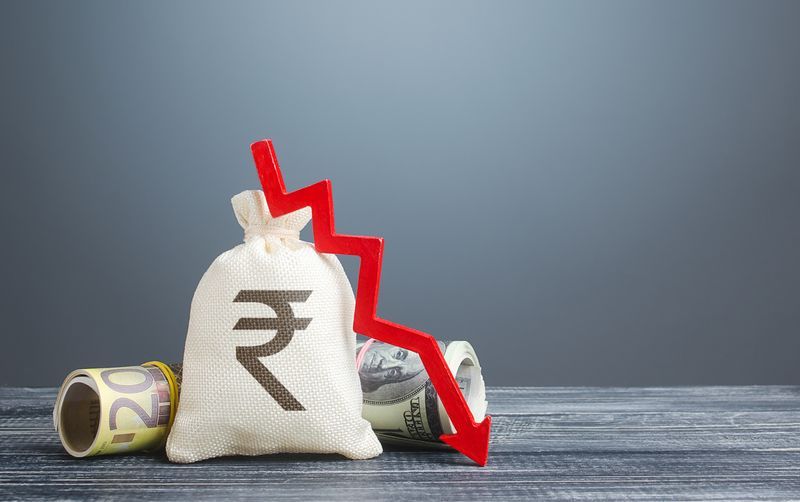
In recent weeks, there has been significant pressure on the Indian rupee due to global factors including increased oil prices amid the West Asia conflict. As a result of this, the rupee hit the historic low of 95.22 in intra-day trade on March 30, against the US dollar.
Fluctuations in currency often serve as early warning indicators. A significant decline in the rupee indicates that demand for the dollar is growing more quickly than supply.
Dr V K Vijayakumar, Chief Investment Strategist, Geojit Investments Limited, said the fundamental reasons for rupee depreciation are spike in crude and the consequent widening of trade deficit, rising dollar and the sustained FPI selling.
“If rupee is to turn stable these factors have to reverse. If the war ends soon and crude declines sharply, rupee can stabilise. However, the sustained FPI selling continues to be a concern,” he said.
Impact on India’s economy
Massive foreign investors selling in Indian market
In recent weeks, foreign institutional investors (FIIs) have been withdrawing their funds from Indian stocks. In fact, FIIs have sold equities worth Rs 1.04 lakh crore till March.
Inflation pressure
The domestic price of imported items increases when a currency depreciates. This pass-through to pricing has the potential to increase inflation in India, where a significant portion of energy and essential industrial inputs are imported.
Increased fuel and commodity prices can have a cascading effect on consumer products, manufacturing, and transportation, ultimately impacting household cost-of-living indices.
Changing trade dynamics
Theoretically, a depreciating rupee might lower the cost of Indian exports and increase their competitiveness in global markets. Increased pricing competitiveness overseas may help industries including textiles, chemicals, autos, and IT services.
Reason behind the fall in rupee
Increased oil prices
More than 80 per cent of India’s crude oil requirements are met by imports. The country needs more dollars to pay for imports when the price of oil rises significantly globally. The rupee weakens as a result of the increased demand for the US dollar. In addition, the tensions in West Asia have recently caused oil prices to soar around USD 120 per barrel.
Strong American currency dollar globally
Global investors favor safer investments during turbulent times. The US dollar is regarded as the reserve currency of the world. Therefore, money flows into the dollar makes it more strong, as risk increases globally.
Geopolitical uncertainty
Any uncertainty in the geopolitical landscape, especially in the region which is considered the oil-producing epicentre such as the ongoing West Asia conflict, is likely to impact the currency, which eventually leads to rise in oil prices and capital outflows.
Meanwhile, the rupee logged one of its steepest single-day gains in many years and settled 156 paise higher at 93.14 (provisional) against the US dollar on Thursday after RBI stepped in with a slew of measures to restrict banks from onshore forward markets.
“The rupee has significantly appreciated to around Rs 92.90 level by 1 pm on Thursday. This appreciation is the consequence of a short-squeeze triggered by the RBI’s directive to banks capping the deliverable rupee position in the onshore market to USD 100 million a day,” said Dr V K Vijayakumar.
He outlined that the fundamental reasons for rupee depreciation were spike in crude and the consequent widening of trade deficit, rising dollar and the sustained FPI selling.
Riyank Arora, Associate Vice President – HNI & Derivatives, Hedged.in, said the recent fall in the rupee was largely driven by external factors, primarily the surge in crude oil prices amid escalating tensions in West Asia. As India imports the majority of its oil requirements, higher crude prices increase demand for dollars, putting immediate pressure on the currency.
“The impact on the economy is two-fold. A weaker rupee raises the cost of imports, especially fuel, which feeds into inflation through transportation and production costs. This can reduce consumer spending and corporate profitability. Additionally, rising oil prices tend to widen the current account deficit,” he said.
In terms of preparedness, he outlined that India was in a relatively stronger position compared to past episodes. RBI has adequate forex reserves to manage excessive volatility, while the government has policy flexibility to adjust fuel taxes or deploy targeted measures to contain inflation.
Going forward, the rupee’s direction would depend largely on oil price trends and geopolitical developments, he added.