
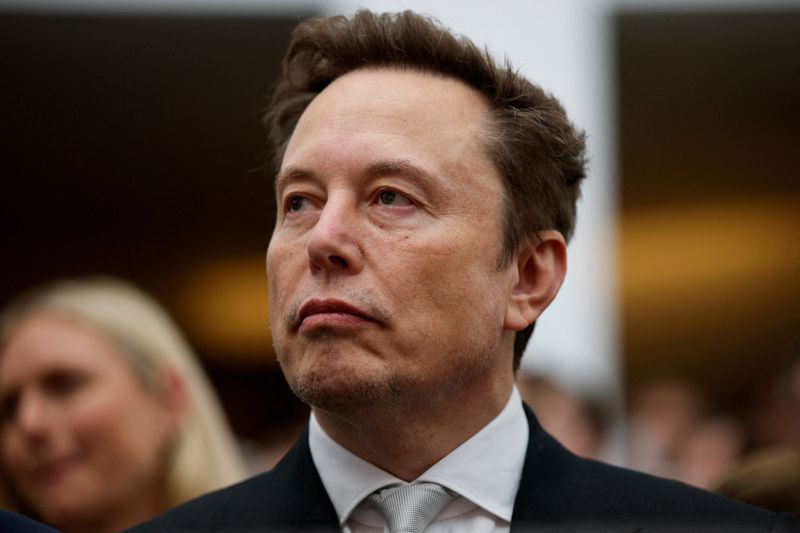
Escalating his war of words over Starlink’s entry into India, Elon Musk has taken a fresh swipe at Reliance Industries chairman Mukesh Ambani, sarcastically addressing him as “Prime Minister Ambani” and accusing him of seeking to preserve a monopolistic hold over the Indian market.
In a post on X, Musk wrote, “Dear Prime Minister Ambani, Please accept my humble apologies for not realizing that you are the real boss of India,” taking a dig at the industrialist amid the ongoing dispute over the regulatory framework governing satellite communication services in India.
Accusing Ambani of preferring to maintain what he described as “monopolistic exploitation” of Indians, Musk asked whether he would nevertheless consider allowing Starlink to enter the market and compete with existing players.
“Naturally, you would prefer to maintain your monopolistic exploitation of the great people of India, but would you nonetheless consider allowing Starlink to compete?” Musk said.
Making a case for Starlink’s potential benefits, Musk said, “There are many areas of India, as there are in all countries, with no Internet access, which denies children the opportunity for education and for small businesses the opportunity to sell their goods to a global market. Starlink would change their lives for the better”.
Dear Prime Minister Ambani,
Please accept my humble apologies for not realizing that you are the real boss of India.
Naturally, you would prefer to maintain your monopolistic exploitation of the great people of India, but would you nonetheless consider allowing Starlink to compete?
There are many areas of India, as there are in all countries, with no Internet access, which denies children the opportunity for education and for small businesses the opportunity to sell their goods to a global market. Starlink would change their lives for the better.
Thank you
— Elon Musk (@elonmusk) October 9, 2026
The latest remarks come amid a growing war of words over Starlink’s proposed entry into India, with Musk previously accusing unnamed “oligarchs” of attempting to block the service to protect their “monopolistic chokehold” on the Indian market.
The government has rejected allegations of discriminatory treatment, maintaining that India follows a fair and non-discriminatory authorisation framework for telecommunications services, including satellite communications.
It has also said that three satellite communication service providers are at broadly similar stages of the regulatory process.
Earlier, Union Communications Minister Jyotiraditya Scindia asserted that the country does not allow a monopoly in any sector.
Emphasising that three companies had already received satellite communication (satcom) licences, Scindia said the debate appeared to be centred on one particular company, even as the government maintained that all licence holders must meet the prescribed security requirements before commencing operations.
“India doesn’t allow monopoly in any sector,” Scindia said, stressing that satcom operators would be permitted to begin services only after individually fulfilling the stipulated security norms and other regulatory requirements.
Clarifying the next steps in the licensing process, the minister said the three licence holders would receive spectrum after the government finalised the revenue-sharing or charge mechanism.
He underlined that obtaining a licence alone did not automatically entitle a company to commence operations, as compliance with security requirements remained mandatory.
