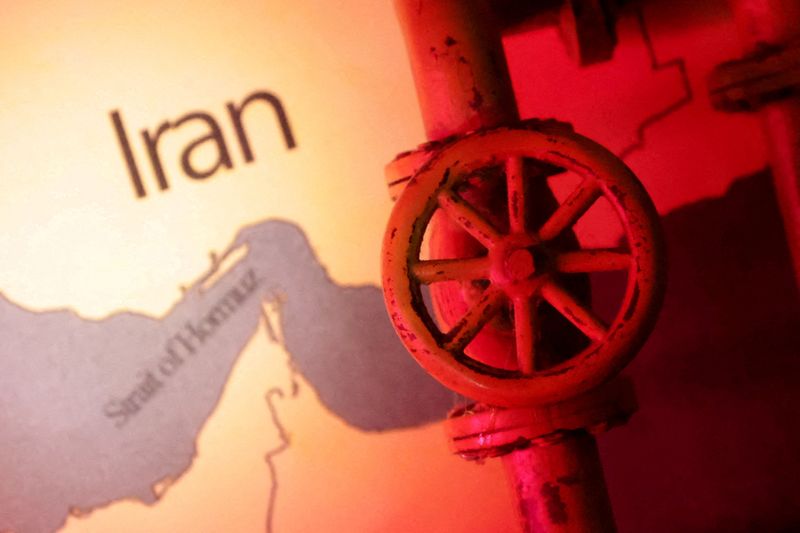
Global oil prices surged sharply on Sunday after US and Israeli military strikes on Iran triggered fresh conflict in West Asia and Tehran reportedly moved to shut the strategically vital Strait of Hormuz, raising concerns over energy supplies to major importers including India.
As per reports, Brent crude jumped nearly 10 per cent in over-the-counter trading to around $80 a barrel, oil traders said, with analysts warning prices could climb towards $100 if the crisis escalates or shipping disruptions persist. The global benchmark had already touched $73 per barrel on Friday — its highest level since July — amid mounting geopolitical tensions before markets closed for the weekend.
Despite the sharp market reaction, government officials say India faces no immediate threat to oil availability, citing adequate inventories and diversified sourcing.
Iran’s announcement of closing the Strait of Hormuz — the narrow maritime corridor at the mouth of the Persian Gulf through which nearly one-fifth of global oil and gas supplies pass — has slowed tanker movement dramatically, according to maritime security assessments.
The situation acquired an Indian dimension after Oman’s Maritime Security Centre reported that an oil tanker, Skylight, flying the Palau flag, was targeted near Khasab Port. Of the 20 crew members evacuated, 15 are Indian nationals. Four crew members sustained injuries and were shifted for medical treatment following coordinated rescue operations by regional authorities.
Officials in New Delhi said India currently holds crude stocks sufficient for about 10 days of consumption, along with refined fuel reserves covering another five to seven days, providing a short-term cushion against supply disruptions.
“India remains adequately supplied in the near term,” a senior official said, adding that contingency plans were in place should tensions prolong.
The International Energy Agency said it was closely monitoring developments and their implications for global energy markets. Its Executive Director, Fatih Birol, noted that markets remained well supplied so far, even as consultations continued with major producing nations.
However, analysts cautioned that India’s heavy reliance on seaborne energy imports makes the Strait of Hormuz a critical strategic vulnerability.
India imports nearly 88 per cent of its crude oil requirement and about half of its natural gas needs. A large share of supplies from Iraq, Saudi Arabia, the UAE and Kuwait transits through the Hormuz passage before reaching Indian refineries.
More crucially, almost the entirety of India’s liquefied petroleum gas (LPG) imports — essential for household cooking fuel and fertiliser production — moves through the same route. Any prolonged disruption could therefore quickly strain domestic LPG supplies and push up energy costs.
Energy economists warned that even partial disruption, without a complete blockade, could drive up freight charges, insurance premiums and benchmark crude prices, potentially feeding into inflation in an import-dependent economy.
Officials indicated India could recalibrate procurement by increasing purchases from alternative suppliers, including Russia and producers outside the Gulf region — an approach successfully deployed during earlier geopolitical crises.
Meanwhile, key oil producers within the OPEC+ grouping, including Saudi Arabia, Russia, Iraq, the UAE and Kuwait, held consultations on Sunday and reaffirmed their commitment to market stability, agreeing to cautiously adjust production levels beginning April to prevent excessive volatility.
With uncertainty persisting over the duration and scale of the West Asian conflict, markets remain on edge. For India, the unfolding crisis underscores the continuing importance of strategic petroleum reserves, diversified sourcing and maritime security preparedness as geopolitical risks increasingly intersect with energy security.