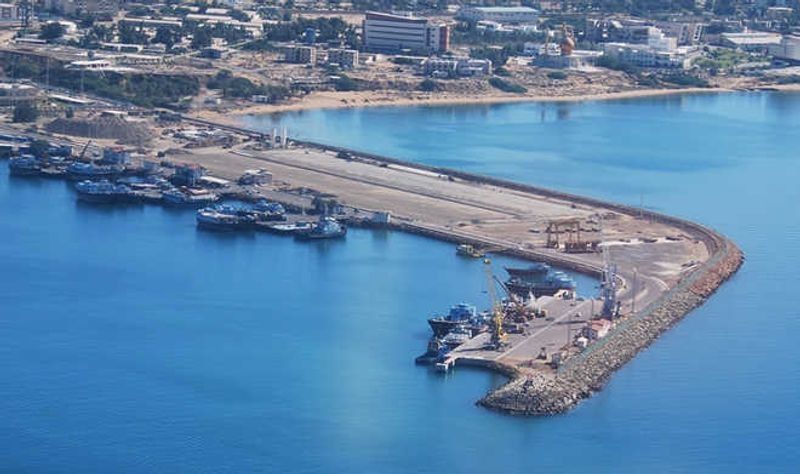
The Union Budget for 2026–27 has made no allocation for the Chabahar Port project in Iran, signalling a pause in fresh government funding for one of India’s most strategically significant overseas connectivity initiatives amid mounting geopolitical and sanctions-related uncertainties.
The project had received Rs 400 crore in the Budget Estimates for 2025–26, following a token Rs 100 crore allocation in the Revised Estimates of the same year. The absence of funding in the current Budget marks a clear departure from the stepped-up allocations of the previous year and points to a phase of consolidation rather than expansion.
Developed by India as a gateway to Afghanistan and Central Asia, bypassing Pakistan, Chabahar has long been viewed as a pillar of New Delhi’s regional connectivity strategy. Located on Iran’s Gulf of Oman coast and outside the Strait of Hormuz, the port offers India direct access to the Indian Ocean and onward connectivity into the Eurasian landmass.
India’s engagement at Chabahar, primarily at the Shahid Beheshti terminal, dates back over two decades but gathered momentum after a 2016 trilateral agreement with Iran and Afghanistan. In May 2024, India signed a 10-year contract with Iran to operate the terminal through India Ports Global Limited (IPGL), committing about $120 million for port equipment and infrastructure.
However, progress has been repeatedly hampered by US sanctions on Iran, regional instability and operational constraints. While Washington had earlier granted specific sanctions waivers recognising Chabahar’s role in supporting Afghanistan’s stability, these protections were revoked in September 2025, exposing entities linked to the project to potential secondary sanctions. A temporary six-month waiver, valid until April 26, was later granted to allow an orderly transition.
Reportedly, India has already released its full $120-million financial commitment to Iran and scaled down official operational visibility to reduce exposure.
Strategically, Chabahar remains critical for India as an alternative route to landlocked Afghanistan, seen as a counterweight to China-backed Gwadar Port in Pakistan, and a key node in the International North–South Transport Corridor (INSTC) linking India with Russia and Europe.
The budgetary signal comes amid shifting geopolitical equations in West Asia and unresolved tensions between Iran and the West, factors largely beyond New Delhi’s control. For now, the government appears focused on safeguarding long-term strategic gains from Chabahar while avoiding steps that could trigger sanctions affecting Indian companies and banks.